Statare Women
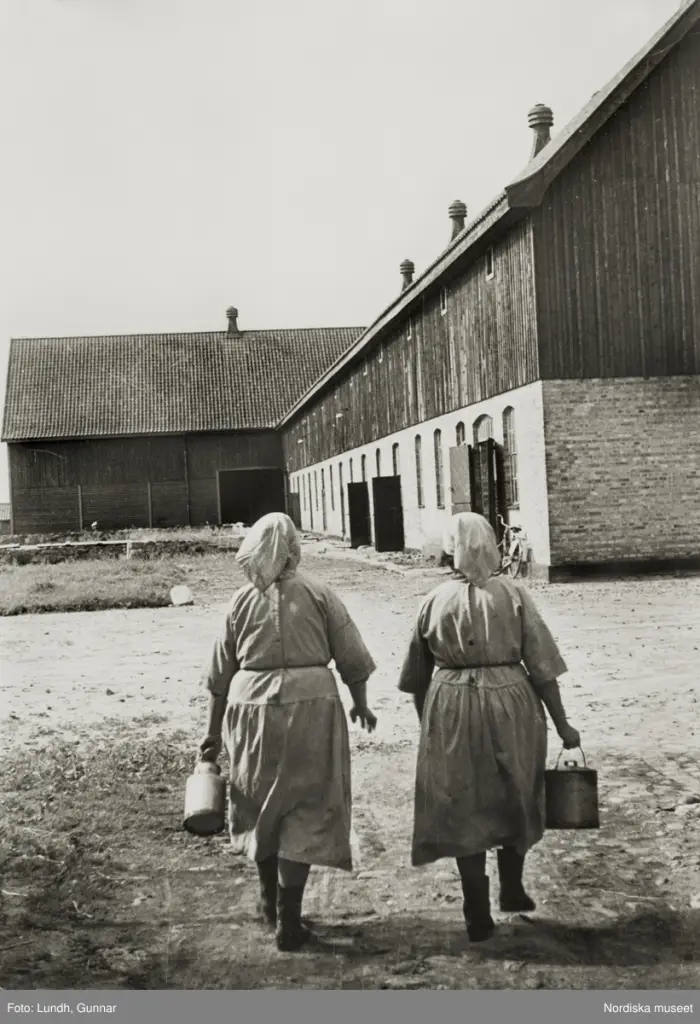
Two women milkers, Ester Olsson and Nancy Persson, on the way to the barn on Stureholm estate. Vällinge, Skåne. Taken by Gunnar Lundh in 1946. Nordiska museet, Stockholm. The conditions of life and labor for landless couples who were employed on large-scale, capitalist farms and estates on the fertile plains of southern and central Sweden […]
Professional and Amateur Photographers
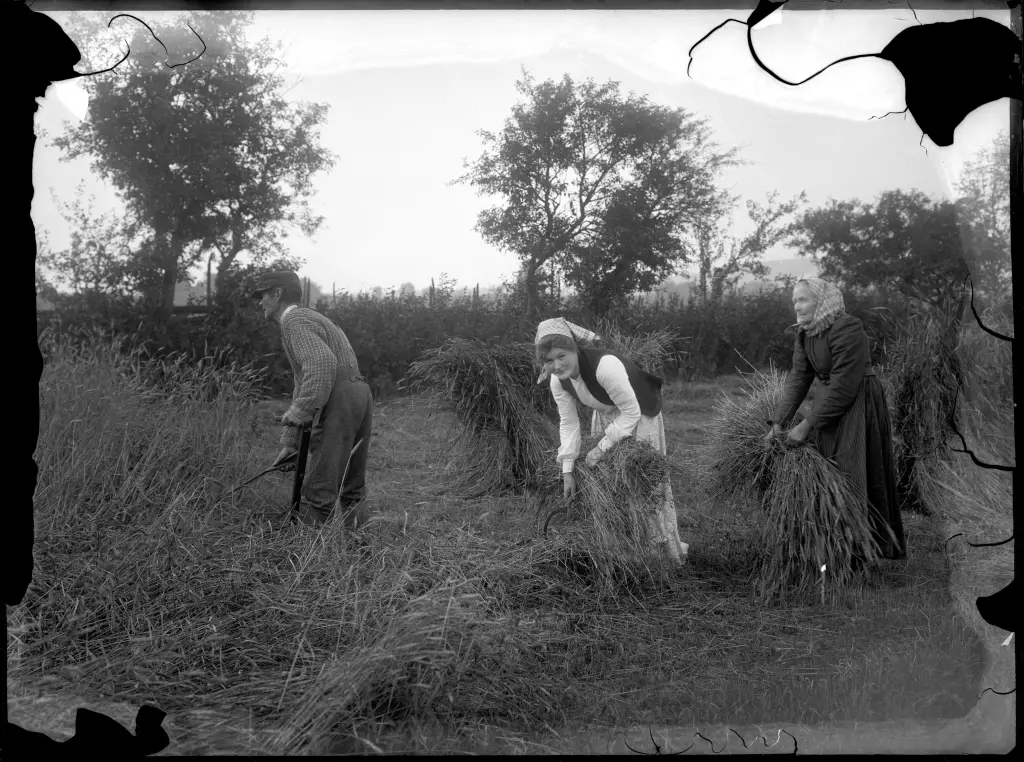
Ida Häckner and Gunnar Lundh were consummate professionals. At the other end of the spectrum are skilled amateurs who photographed their relatives, friends and neighbors as they went about their daily and seasonal farm work. Swedes were as enthusiastic about the amazing power of photography to capture and preserve passing moments as their counterparts elsewhere. […]
Portraying Women Engaged in Dairying
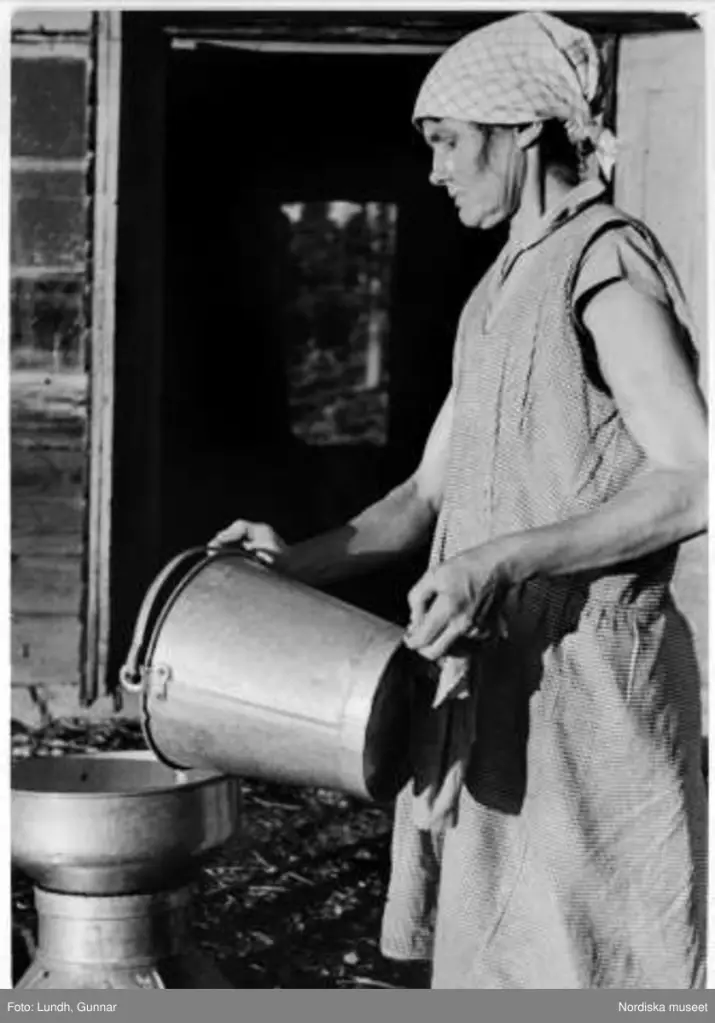
Woman pouring milk from a pail into a milk can. Stockholm county (now in Uppland). Taken by Gunnar Lundh in 1935. Nordiska museet, Stockholm. Consider this striking image of a woman straining milk outside the cowshed on the Börjeson family farm near the Baltic coast north of Stockholm. Three generations were living there—an older couple, […]
Men and Women Sharing Labor
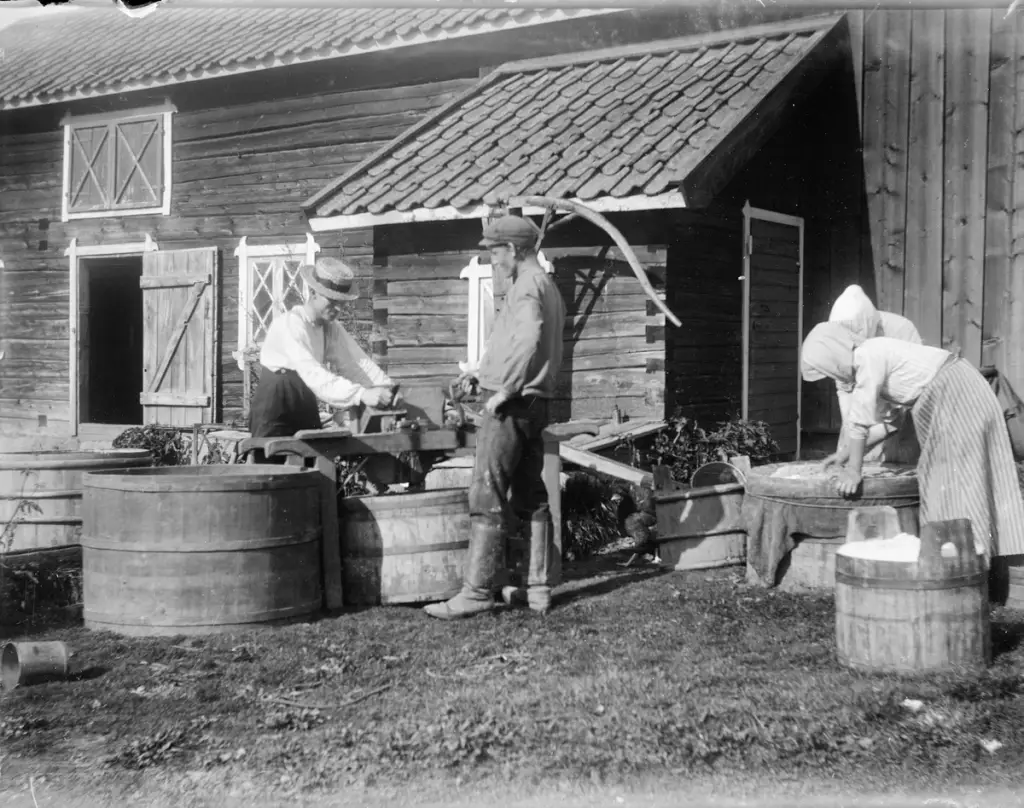
Doing Laundry John Alinder and others doing laundry at the Alinders’ farm. Sävasta, Altuna parish, Västmanland (now in Uppland). Taken by John Alinder, undated. Upplandsmuseet, Uppsala. Few photographs of women performing household chores are found in the archives before the middle of the twentieth century. The technology was not suited to taking pictures of indoor […]
Landowning Families and Their Farms
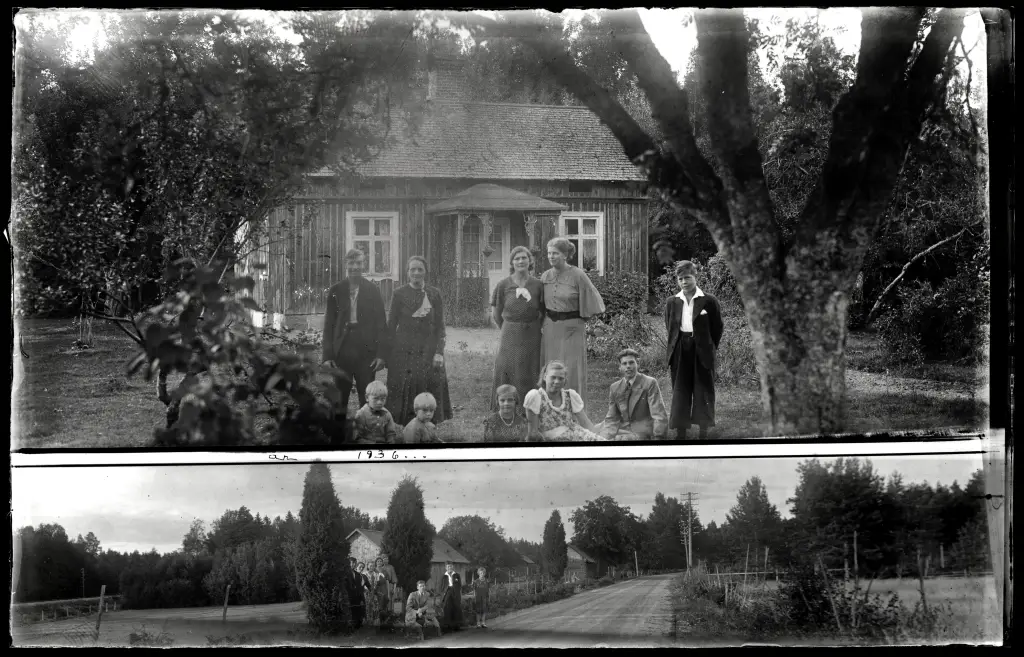
Family outside their farmhouse. Near Skövde, Skaraborg (now Västergötland). Taken by Anders Karlsson in 1936. Västergötlands museum, Skara. Conventional photographs of landowning farm families emphasize their resources of land and labor, but subsume women and men, relatives and employees, into family-centered units. During the early twentieth century, families increasingly identified themselves with a specific farm, […]
How do we see gender in these photographs?
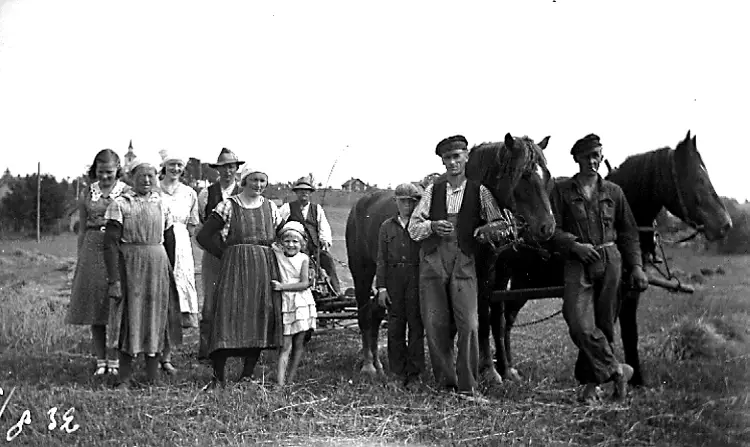
The large and varied body of photographs of women performing physical labor on Swedish farms during the early twentieth century that is available at digitaltmuseum.se conveys the multidimensional and flexible character of gender at work. Close cooperation between husbands and wives was common for some farm tasks, but other tasks were usually performed by women […]
Gender-Mixed Work Groups
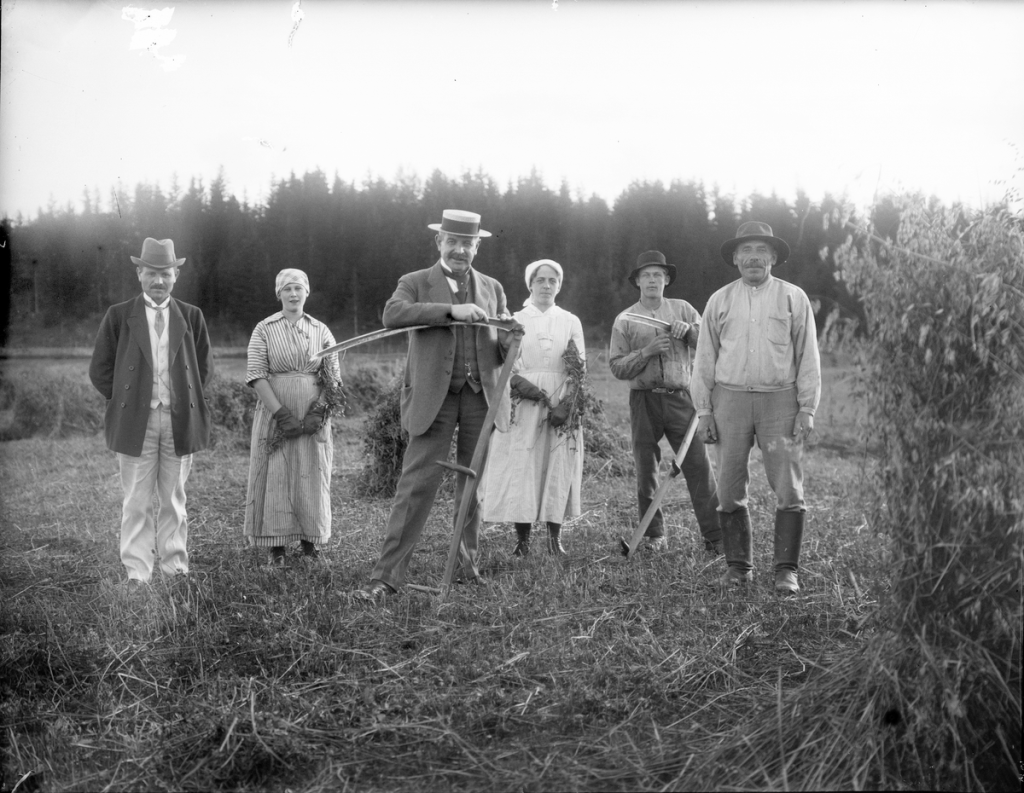
Seasonal operations such as making hay and harvesting grain required larger work crews composed of men and women from neighboring households and laborers of both sexes hired by the task or the day. Adult men used scythes cut hay or grain, and women, older children, and aging men raked and turned the hay and put it […]
Family-Centered Groups and Gangs of Hired Laborers
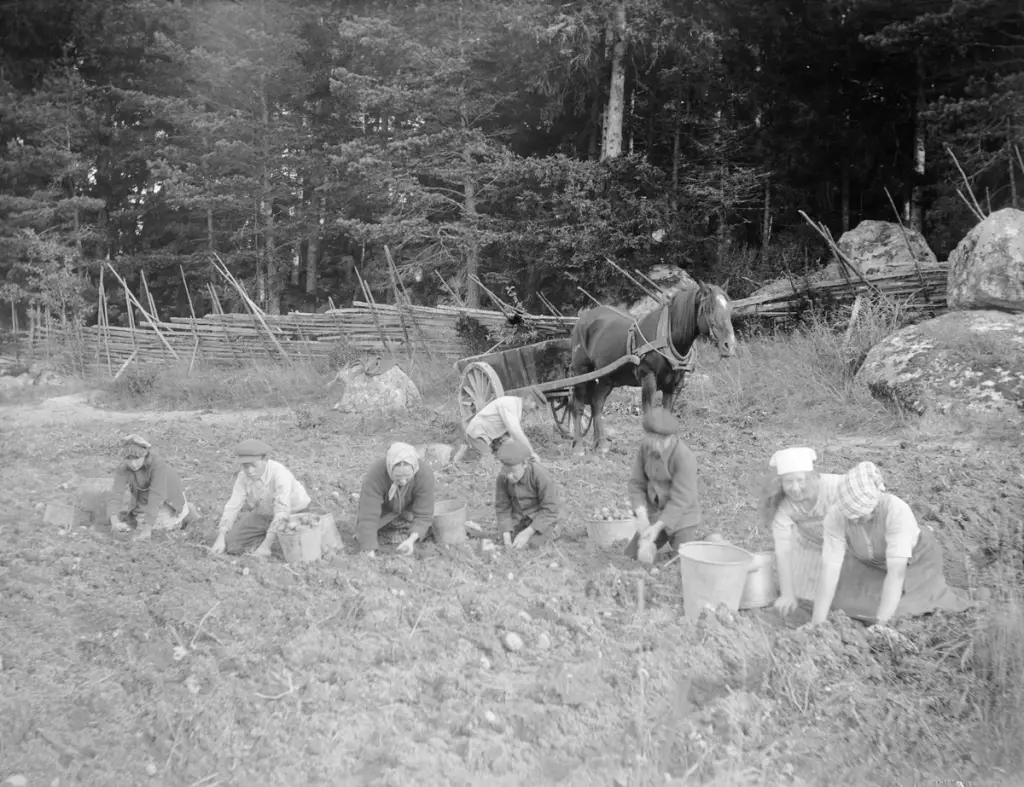
Digging potatoes on the Alinders’ farm. Sävasta, Altuna parish, Västmanland (now in Uppland). Taken by John Alinder in 1920. Upplandsmuseet, Uppsala. In rural Sweden, potatoes were a major component of families’ diets, the home-brewed spirits called “schnapps,” and the mash fed to livestock. Everyone in the household participated in the work, which was done by […]
Dairymaids in Centralized Mechanized Dairies
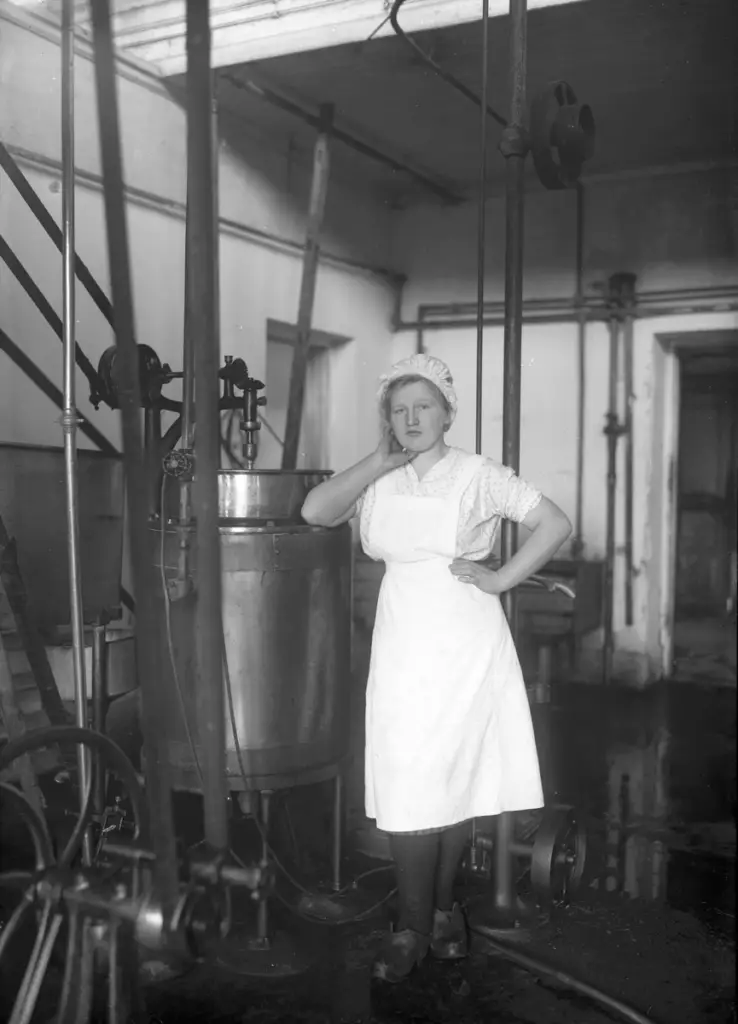
Lisa Larsson in the dairy on Mackmyra estate, Gävleborg. Taken by an unknown photographer in the early 1920s. Länsmuseet Gävleborg, Gävle. The expansion and mechanization of the dairy industry transformed the labor process for women, who continued to be responsible for milking and making butter and cheese. In Sweden, in contrast to other countries in […]