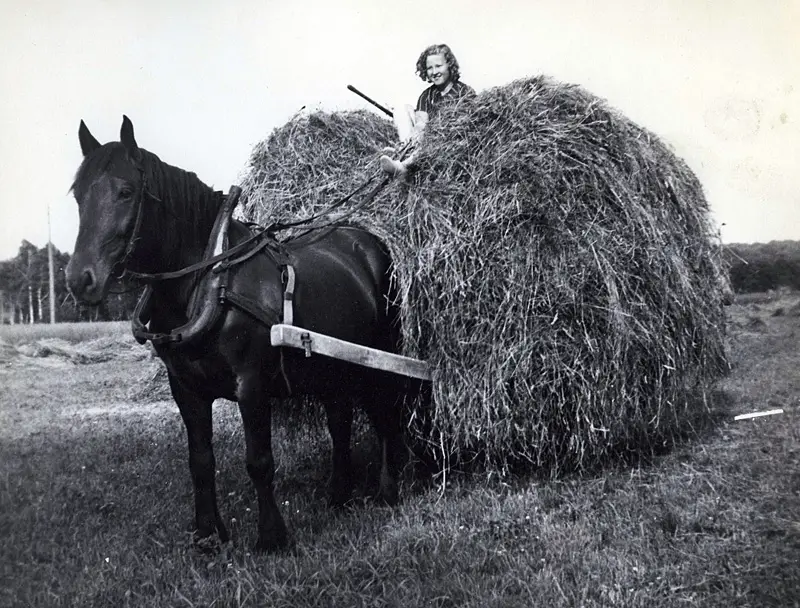
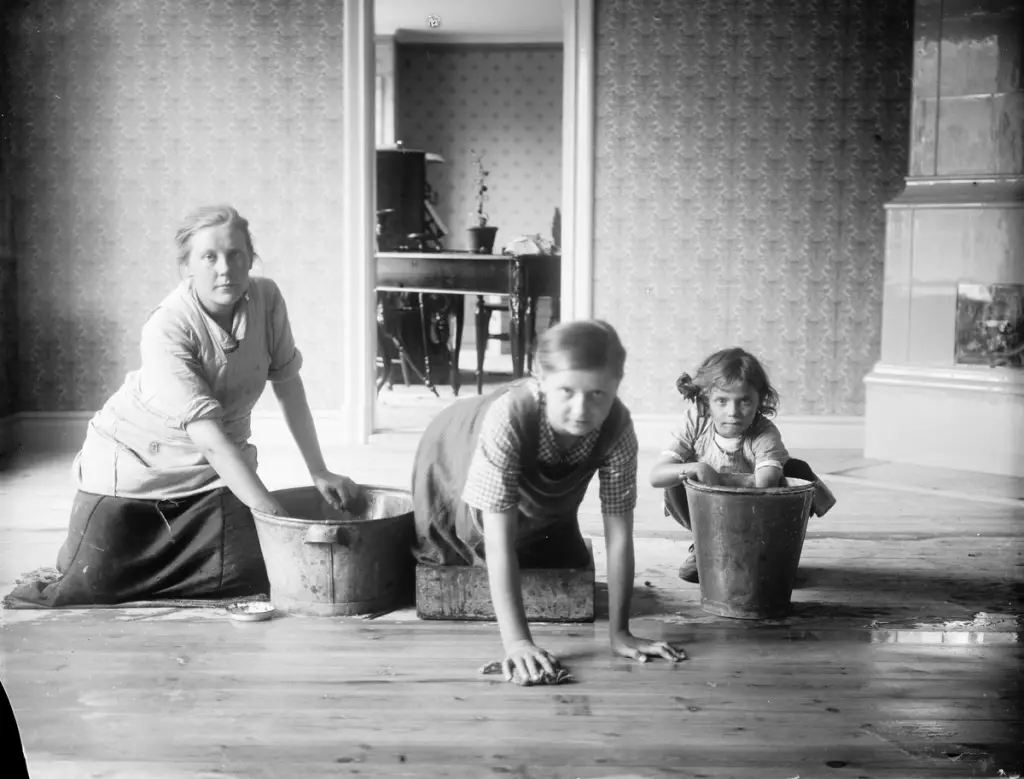
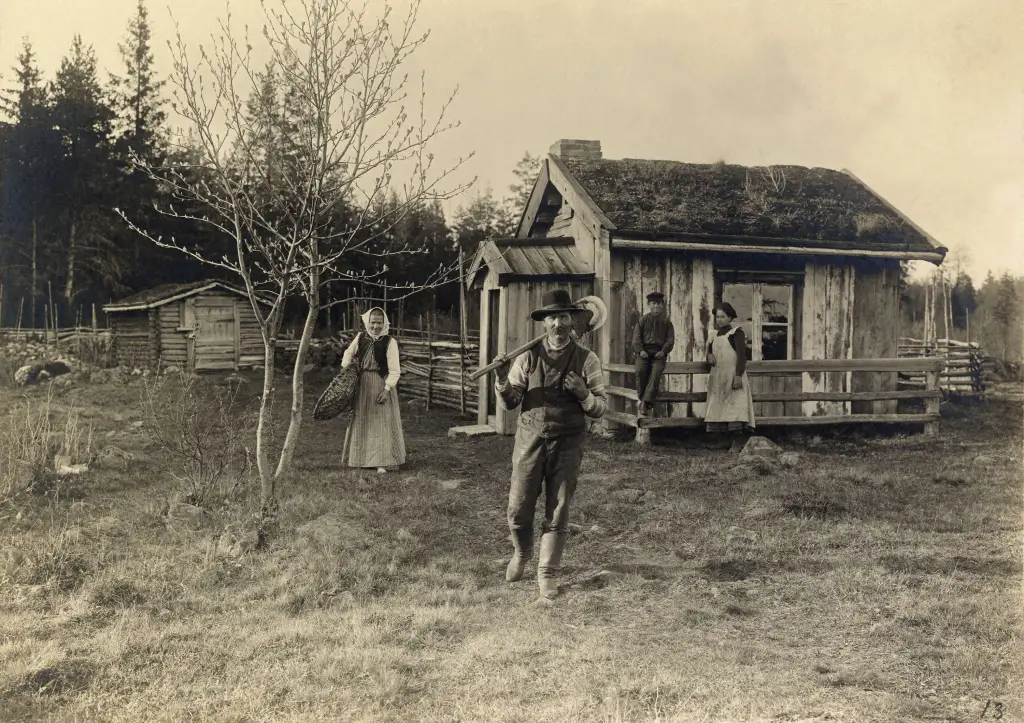
Two women milkers, Ester Olsson and Nancy Persson, on the way to the barn on Stureholm estate. Vällinge, Skåne. Taken by Gunnar Lundh in 1946. Nordiska museet, Stockholm.
The conditions of life and labor for landless couples who were employed on large-scale, capitalist farms and estates on the fertile plains of southern and central Sweden were so poor that they became a national scandal. They were paid not in cash but in housing and farm products. When they attempted to unionize their landlords summarily evicted them. Many moved to a different farm at the end of each annual contract in search of better conditions.
Middle-class social reformers described statare as a downtrodden, demoralized, and improvident class. Urban critics condemned the fact that women in statare families were required to milk twice a day, a form of involuntary labor they called “the white whip.” As a result of their work in the cowshed and the fields, they alleged, these women neglected their numerous children, who consequently had a high mortality rate. The cycle of poverty was perpetuated from one generation to the next, as their children married young in hopes of becoming tenant farmers but remained caught in the system.
Gunnar Lundh focused his camera’s eye on statare from the late 1930s through the late 1940s. Rather than depicting them as hapless victims of their circumstances, as liberal reformers commonly did, Lundh presented these rural proletarians as sturdy and self-respecting individuals who performed valuable labor. His photographs portray statare women as constantly struggling against the difficulties they faced as hired laborers and mothers. Class mattered, but Lundh saw them as more similar to women in landowning families than different from them. Their womanhood was never called into question by the ways their bodies and labor were represented in his photographs.

Statare woman washing her children outdoors on Kulla Gunnarstorp, Skåne. Taken by Gunnar Lundh in 1946. Nordiska museet, Stockholm.
The contrast between the modern, whitewashed cowsheds and the squalid, overcrowded housing for statare demonstrates the limits of their power to alter their situation. Yet Lund showed women taking care of their children as best they could, given their scanty resources. Here a woman bathes her children at the outdoor spigot because their cramped lodging on the estate—unlike the cowshed—had no running water indoors.

Women hand milking in an open cowshed on an estate in Skåne. Taken by Gunnar Lundh in 1946. Nordiska museet, Stockholm.
Gunnar Lundh portrayed statare women with dignity amidst their heavy toil. The solidarity that was built into their daily labor and shared living quarters enabled them to go out on strike. In 1948, after prolonged organizing and a national publicity campaign, the Swedish parliament passed legislation requiring employers to pay them in cash and allow them to live independently. Seen through Lundh’s lens, these long-suffering women displayed a strength of body, mind, and character that made them worthy of respect and the same conditions of life and labor as other working people in Sweden.