The large and varied body of photographs of women performing physical labor on Swedish farms during the early twentieth century that is available at digitaltmuseum.se conveys the multidimensional and flexible character of gender at work. Close cooperation between husbands and wives was common for some farm tasks, but other tasks were usually performed by women or by men working independently. Men and women were embedded in larger, gender-mixed work groups based on kinship and neighborhood, which tended to overlap in rural geographies. Live-in servants and wage laborers hired by the task or season included both women and men, and on family-owned farms they toiled alongside the owners’ family and neighbors.
In this analysis, rather than regarding gender as a set of conventional notions about which tasks were assigned to men and which to women and then noting exceptions that arose from urgent necessity, gender relations are conceptualized as constituted in and through work. Women and men labored alongside one another in some circumstances; in others, women and men carried out distinct operations for which each was primarily responsible.
In rural Sweden, the gender relationships constructed through physical labor did not constitute distinct domains belonging to women or to men. Although women were responsible for performing routine household tasks and taking care of the dairy cows and men were responsible for cultivating grain in the fields and taking care of the draft horses, men and women worked together in haying and the harvest, the most labor-intensive farm operations. These crops not only nourished farm families and their livestock but provided them with income.
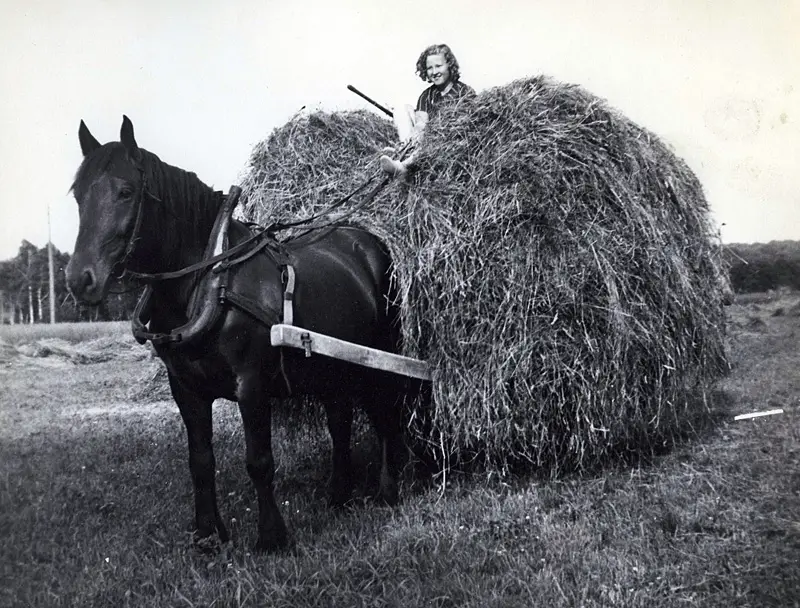
Individuals, families and households arranged their work to suit themselves. As farmers adopted horse-drawn mowing and reaping machines, photographs show men raking and turning hay and gathering and binding grain alongside women. The strong cultural associations of men with horses and women with cows were also eroded in practice over time. Photographs of gender-mixed groups show women as well as men sitting or standing by themselves on top of large loads of hay, holding the reins, and directing the horse team toward the loft or barn. Male farmhands appear in photographs taken in the cowshed on farms with large-scale dairy operations, where they distributed feed and straw and cleaned the floors of manure, and well-trained men and women were employed as cowshed and dairy supervisors on estates. When farms shifted from milking by hand to milking machines, advertisements featured men as well as women operating the labor-saving technology.
Feminist historians have demonstrated that women were “the flexible sex,” performing tasks that were usually assigned to men whenever more labor was needed, while men rarely took up tasks that were usually assigned to women. Yet, on farms as in industry, transformations in the work process and expansion in the scale of operations might be accompanied by changes in the gender coding of specific tasks or facilitate their de-gendering so women and men became interchangeable.
The distinctive contribution of historical photographs of women’s bodily labor on farms, however, lies not only in documenting what tasks women performed and with whom they worked, but also in the ways these women were depicted and how the meaning and value of their labor were understood.
Comparing images of rural women at work taken by professionals who were outsiders to the people and places they depicted with those taken by serious amateurs who belonged to the communities they documented reveals similarities in their conceptualization of agrarian womanhood and differences in their inflection. I borrow this term from analyses of oral expression to point out the subtle distinctions evident in visual form. Bodily strength and versatility are apparent in all these images, conveying the value and attractiveness of these womanly attributes, but those taken by rural residents who had continuing connections with the people they photographed register their physicality and subjectivity more intimately and powerfully.
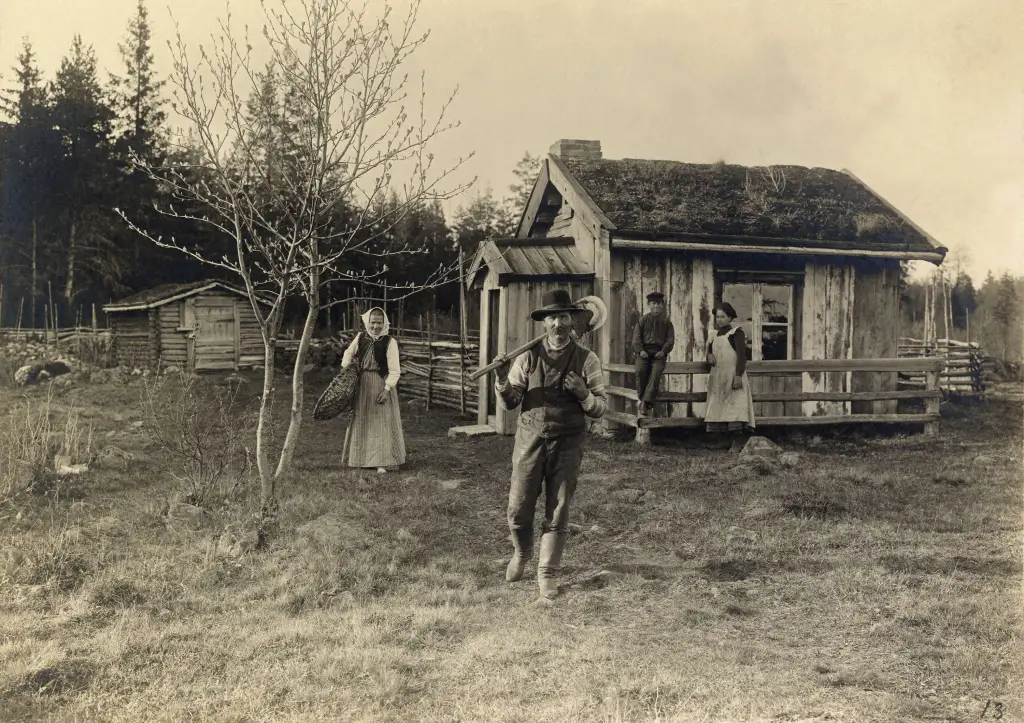
In photographs taken by professionals and strangers, rural women are carefully posed, even statuesque. These images often show women before the work process began, rather than interacting with coworkers. Women and children doing gang labor, when represented at all, were portrayed as anonymous figures in the landscape. In more individualized depictions, professional photographers sometimes captured women looking directly at the camera and smiling. These images were designed to appeal to the male gaze. Yet they did not necessarily reinforce an urban, bourgeois notion of femininity characterized by delicacy, a slim figure, and associations with domesticity, consumption, and leisure. Those attributes of femininity were out of place in rural Sweden except among the upper classes before the Second World War.
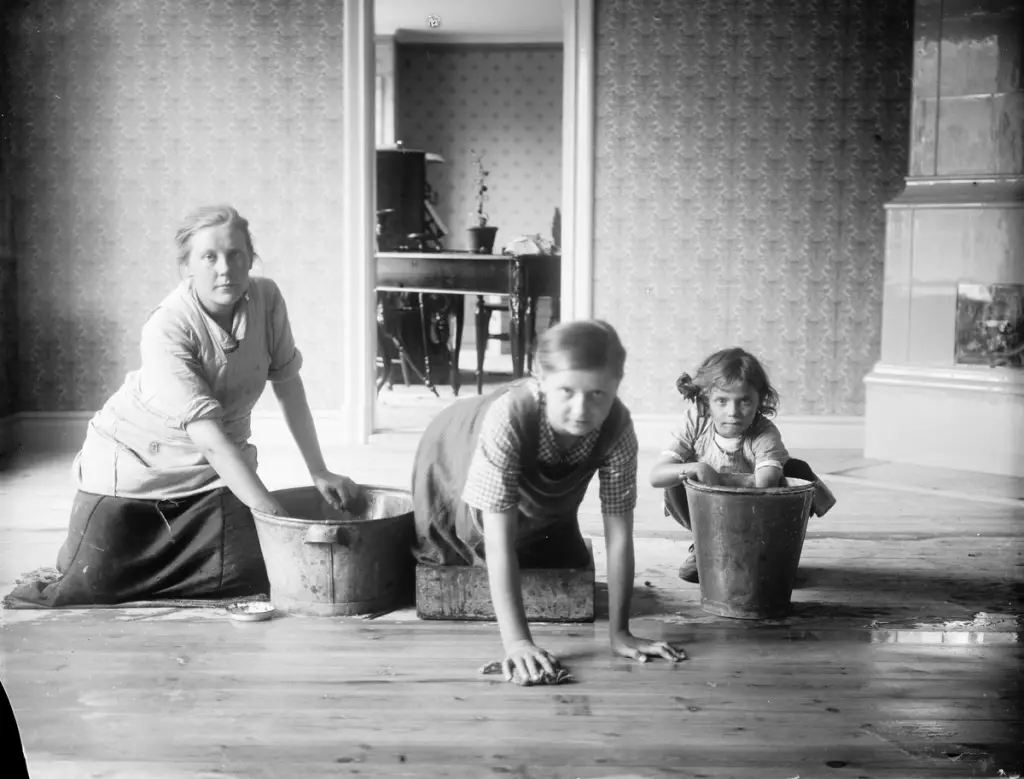
In images co-created by photographers and their subjects, rural women demonstrate muscular strength, endurance, manifold skills, and resourcefulness. They are active figures, and they work in close coordination with relatives and neighbors. They are depicted as coming into direct contact with dirt and organic matter, as shown in their soiled clothing and mussed hair. But those attributes are free of negative connotations. Instead, they link women as well as men to the natural world they transform into livelihoods through their bodily labor.